
Table of Contents
- Why keep a trading journal
- What a good trading journal should measure
- How FX Radar Trading Journal works
- Benefits of a trading journal explained
- Objective performance measurement
- Faster learning curve
- Risk control and position sizing discipline
- Behavioral accountability
- Strategy development and optimization
- How to use a trading journal effectively
- Comparison table Best trading journal features
- Common objections and answers
- Final thoughts and next steps
Why keep a trading journal
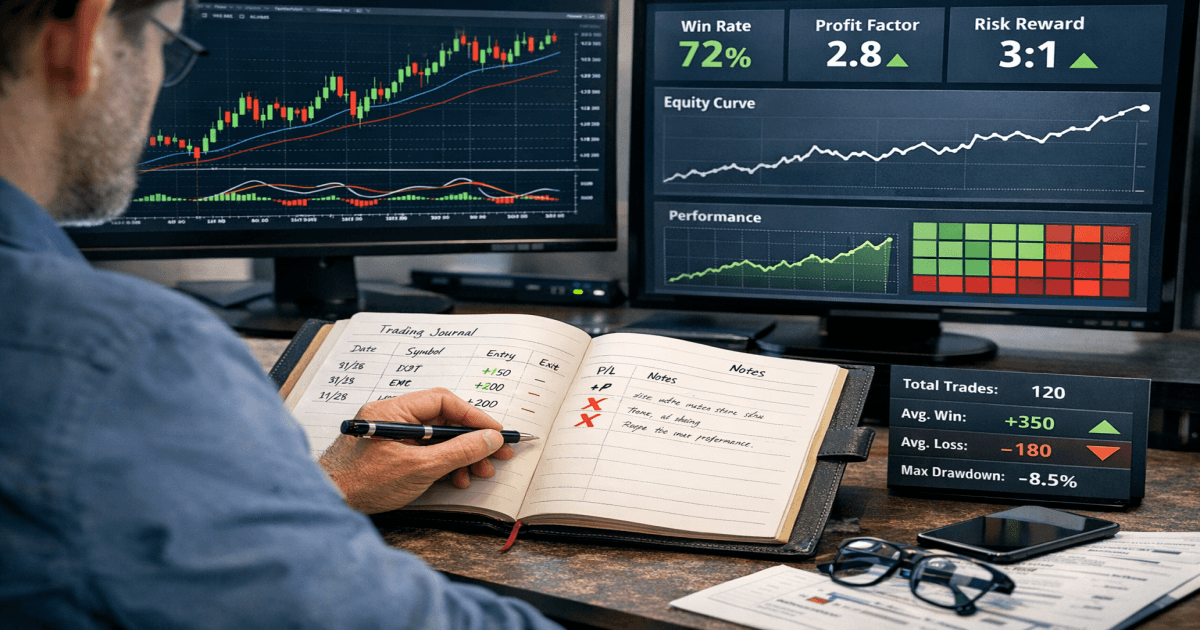
After more than a decade covering markets and trading desks I have seen one constant. Traders who keep disciplined records improve faster and lose less. A trading journal is not a diary. It is a performance tool that converts intuition into measurable facts. When you log trades consistently you get access to real statistics such as win rate, profit factor, risk of ruin, best hours, and best timeframes. Those metrics reveal the leaks in your system so you can fix them.
Keeping a journal is especially important for day traders. A day trading journal forces you to capture intraday context, session bias, and execution details that are invisible in end of day summaries. Over time the journal becomes a map of what works and what does not.
What a good trading journal should measure
A useful journal goes beyond entry and exit prices. At minimum it should record:
-
Trade context: instrument, timeframe, session, and rationale.
-
Execution details: entry type, stop, target, size, slippage.
-
Outcome metrics: PnL, duration, win or loss, break even.
-
Behavioral notes: emotional state, rule deviations, and post trade reflections.
-
Custom tags: setup type, market condition, and strategy label.
With these fields you can answer the core questions every trader must know: where you lose money, which setups are profitable, and when your edge is strongest.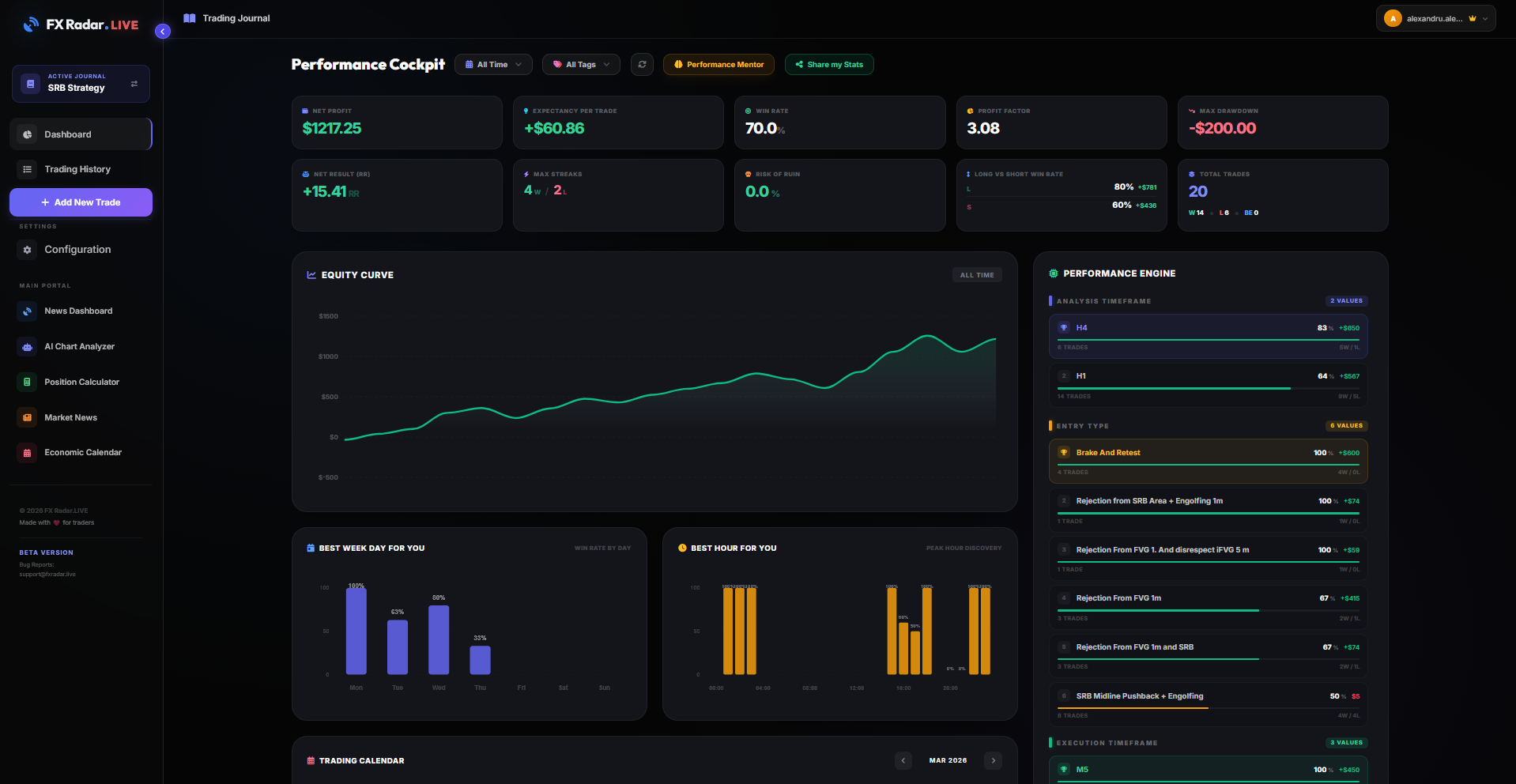
How FX Radar Trading Journal works
FX Radar Trading Journal is built to be practical and honest. It is available as part of FX Radar premium plans. The product is designed for traders who want deep analytics without building spreadsheets from scratch.
Key capabilities
-
Unlimited journals so you can separate accounts, strategies, or instruments.
-
Custom parameters that let you create and track any setup or entry type.
-
Detailed trade history with one click access to full trade breakdowns and screenshots.
-
Dashboard analytics that show win rate, profit factor, equity curves, and time of day performance.
-
AI Mentor that analyzes your history and delivers actionable feedback and improvement suggestions.
-
Premium access required for full features and AI audits.
You can explore the product page at https://www.fxradar.live/trading-journal for full pricing and plan details.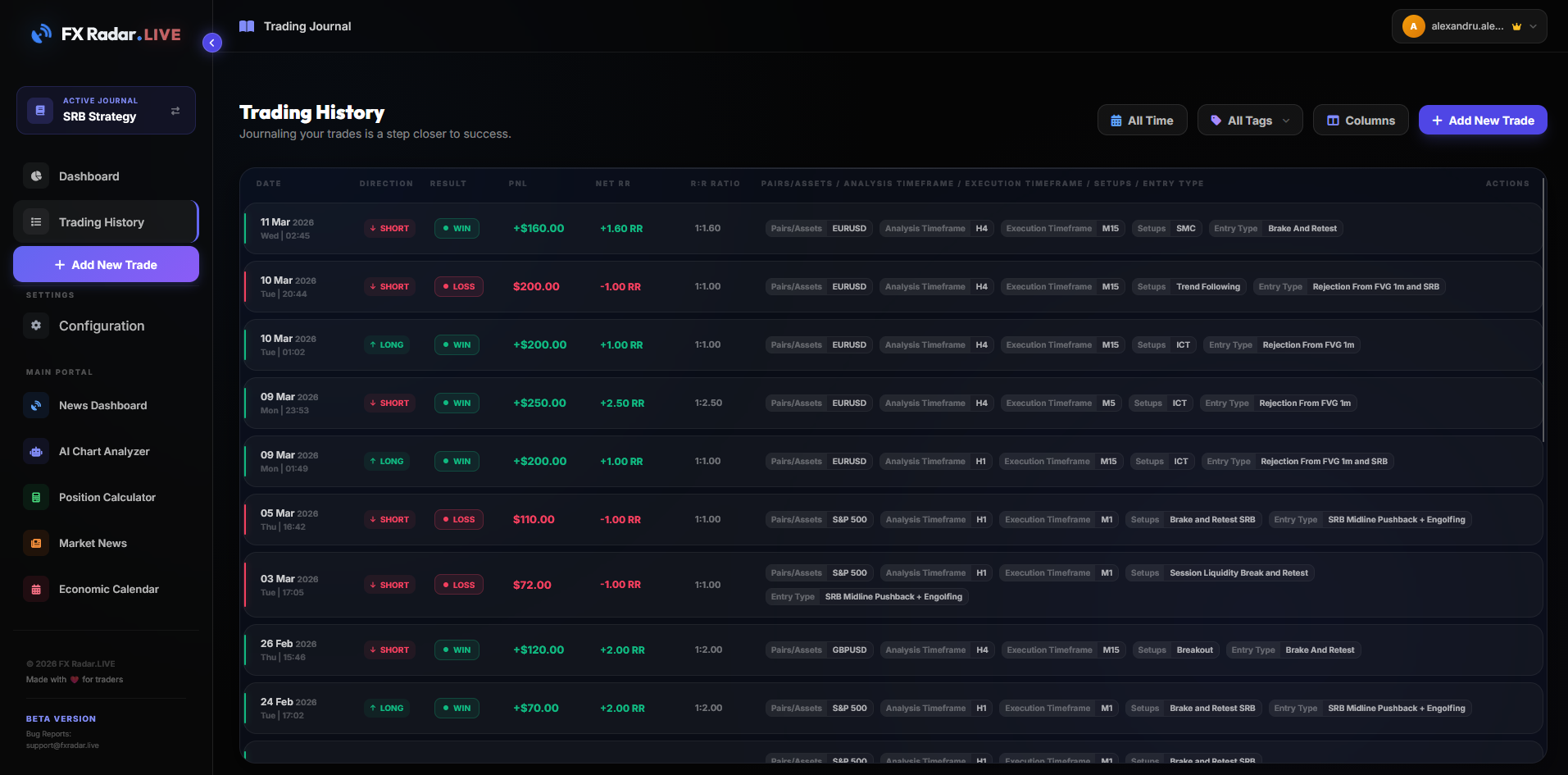
Benefits of a trading journal explained
Objective performance measurement
A journal replaces memory with data. Instead of guessing your win rate you can calculate it precisely. Objective metrics remove excuses and focus improvement.
Faster learning curve
When you tag setups and filter by criteria you accelerate learning. You can test hypotheses and validate which entry types or timeframes produce consistent returns.
Risk control and position sizing discipline
Recording risk per trade and tracking drawdowns helps you manage position sizing and avoid ruin. The journal highlights when you are overexposed or taking correlated bets.
Behavioral accountability
Behavioral notes expose patterns like revenge trading or rule bending. The AI Mentor in FX Radar flags these patterns so you can correct them.
Strategy development and optimization
With enough trades you can compare strategies side by side. The journal lets you keep multiple strategy journals and see which one scales.
How to use a trading journal effectively
-
Log every trade with the same level of detail each time. Consistency is more important than perfection.
-
Use custom tags for setups and entry types so you can filter and compare.
-
Review weekly and monthly to spot trends and implement small changes.
-
Run the AI audit or manual analysis to identify the top three leaks in your system.
-
Act on the findings with a short improvement plan and measure the impact.
Comparison table Best trading journal features
Feature
FX Radar Trading Journal
Typical alternatives
Price
Included in premium plans
Subscription or one time fee
Customization
Unlimited custom parameters
Often limited
AI analysis
Integrated AI Mentor
Rare or separate add on
Journals per account
Unlimited
Often limited
Visual analytics
Heatmaps and equity curves
Varies by product
Common objections and answers
Excel is cheaper
Yes, Excel costs less up front. But building robust analytics, dashboards, and filters takes time and skill. For many traders the time saved and the clarity gained justify a premium tool.I do not have time to log trades
Logging takes minutes. The real time cost is small compared with the money saved by avoiding repeated mistakes. Use templates and quick tags to speed the process.My sample size is small
Do not overreact to short samples. Use the journal to collect data and wait for statistically meaningful samples before making major changes.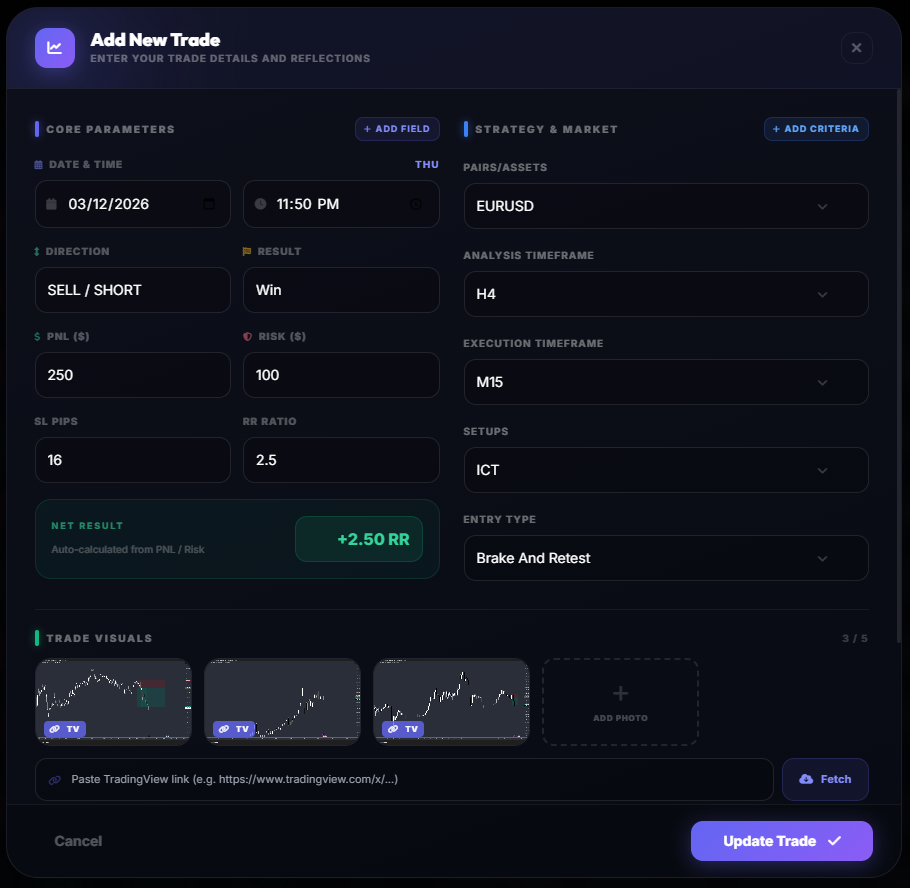
Final thoughts and next steps
A trading journal is the single most effective tool for turning trading into a repeatable process. If you want to improve, stop guessing and start measuring. FX Radar Trading Journal offers a practical, customizable, and AI assisted way to do that. It is available with premium plans and is designed for both day traders and swing traders.
Action
Start by logging your next 20 trades with full detail. Use tags for your top three setups. After 20 trades run an audit and implement one small change. Repeat the cycle.